|
| 




How to Harvest and Use Spruce Tips
What are Spruce Tips?
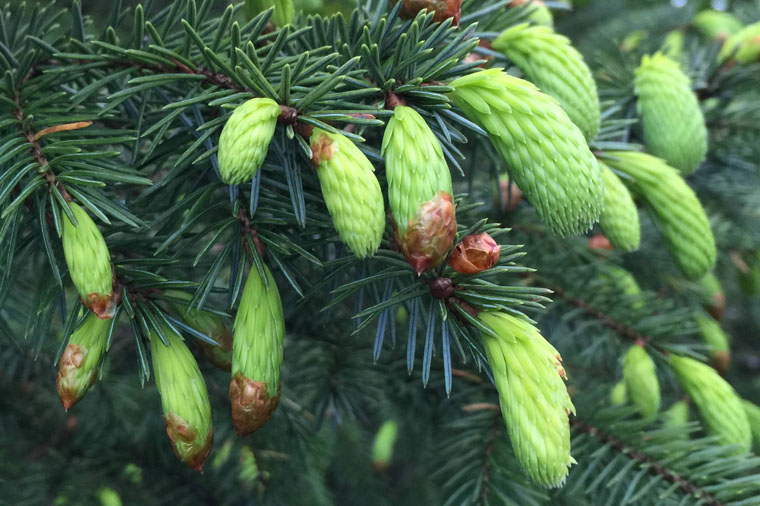
In the early spring, as evergreens wake from dormancy and begin to actively grow again, new growth will appear at the ends of branches. This new growth, referred to as Spruce tips or sometimes Spruce buds, will first appear emerging from a light brown papery protective covering. The Spruce tips themselves are the cluster of tender needles that are bright green in colour and very soft to the touch.
What Makes Spruce Tips so Great?
Spruce tips are a traditional wild food and plant medicine, used by the First Nations throughout history. They are most notably high in vitamin C, beta carotene, starch and sugars. But beyond nutritional value, spruce tips are actually very tasty and can be eaten raw or used to add flavour to numerous recipes. Depending on the variety of spruce tree the flavour can vary. Some varieties such as the White Spruce, Blue Spruce and the Norway Spruce will have a strong piney-citrus note to them, while other species may taste more bitter.
In addition to their high vitamin content, they have shown to have cosmetic value as well. Oils, salves, creams, steams, baths and poultices can all be used to benefit the skin. Due to their antimicrobial and antiseptic properties, Spruce tips can help treat cuts, abrasions, eczema, boils, and acne.
Medicinally, spruce tips can be used as a therapy to help ease lung congestion. It’s antiseptic properties can help with pneumonia, whooping cough, and croup. As a liniment, salve or oil spruce tips also work well to help ease joint and muscle pain.
This blog is meant as an educational and informational resource. While we strive for accuracy, the information provided in this blog is not intended to replace the advice of a medical professional. Please consult your medical practitioner or herbalist before using any plants especially if you take any prescription medications, have a pre-existing condition, allergies, or if you are pregnant or breastfeeding. Kiwi Nurseries Ltd. and the author of this blog do not accept any liability or responsibility for any consequences caused by consuming or using any plants.
When to Harvest Spruce Tips
Spruce tips are at their best flavour and highest nutritional density in early spring, when the tender bright green new growth first emerges from the papery coverings.
How to Harvest Spruce Tips
Spruce tips are incredibly easy to harvest, a little tug at the base of the tip and the cluster will easily pop off.
Be careful not to over harvest and be mindful of where on the tree you pull your spruce tips from. Anytime we forage in nature we should strive to have a minimal impact on the plants and ecosystems we are disrupting. It is best to only pull a few tips from each tree. Each tip removed is a branch that will not continue to grow. When choosing which tips to pull, pull from a side shoot rather than the main branch leader, try to spread out the areas you pull from on one tree, and definately do not pull from the tree top’s leader. Larger more mature trees can handle a modest harvest without harming its overall growth. Try to avoid harvesting from younger trees. A good rule of thumb is to only harvest from trees that are bigger than you, the bigger the better.
It is also important to follow foraging safety guidelines. Always be sure of your identification before using a any plant as some plants may look similar to an untrained eye. Yews have a similar look to Spruce but are toxic to consume.
Also be mindful of possible contaminants in the surrounding environment of that plant, that may make ingesting the plant harmful. For more on our foraging safety guidelines be sure to check out our blog on Winter Foraging.
Use Caution with Spruce Tips
As with most things, too much of even a good thing can be harmful. Spruce tips are dense in their nutrients. Use in moderation, similar to how you would use a seasoning and avoid during pregnancy.
How to Store Your Spruce Tips
Tips can be harvested and used fresh in Spring, but they can also be stored for use throughout the year.
Dry Your tips. Dried tips can be stored indefinitely if dried correctly. The best approach is to fine chop the tips and let air dry while spread over a parchment lined tray. Check daily, once tips are fully dried they can be stored in an airtight container in a cool, dark, dry place.
Infuse Your tips. By infusing your spruce tips in oil or as a syrup, you can create a base product with numerous applications that will maintain a long shelf life.
Freeze Your tips. If you do not intend on drying the tips, you can freeze instead. Fresh tips can be frozen whole or fine chopped. First, freeze the tips while spread over a flat tray. Once frozen, they can be bagged together and stored in the freezer for up to a year..
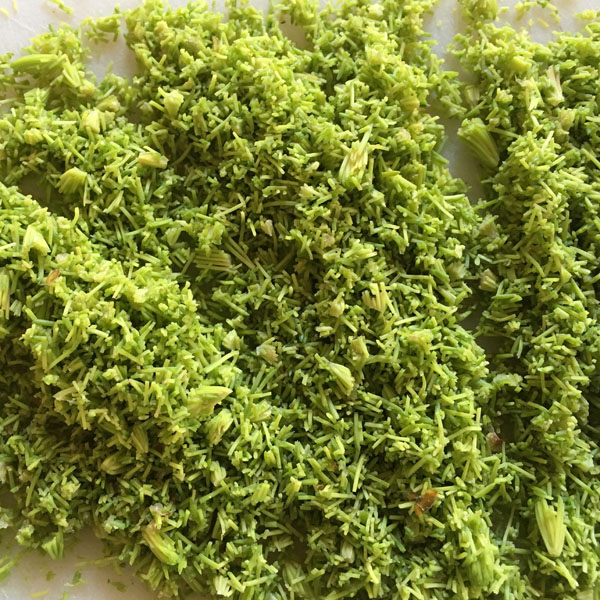
Fresh Spruce Tips
No recipe needed. Spruce tips can be eaten raw or added to many dishes for their piney-citrus flavour, so don’t be afraid to get creative and try them in your favourite recipes! Whole spruce tips can be added to salads and soups. They can also be sauteed and pair nicely with asparagus, brussel sprouts, spinach & collard greens. When chopped and used as a seasoning, spruce tips go well with both red meats and poultry. Try adding finely chopped tips to your favourite rub mix! They can also be used to make a citrusy tea for a little extra vitamin C. Or added to hot water for a steam or a soak to benefit your skin. There are many uses for fresh Spruce tips.
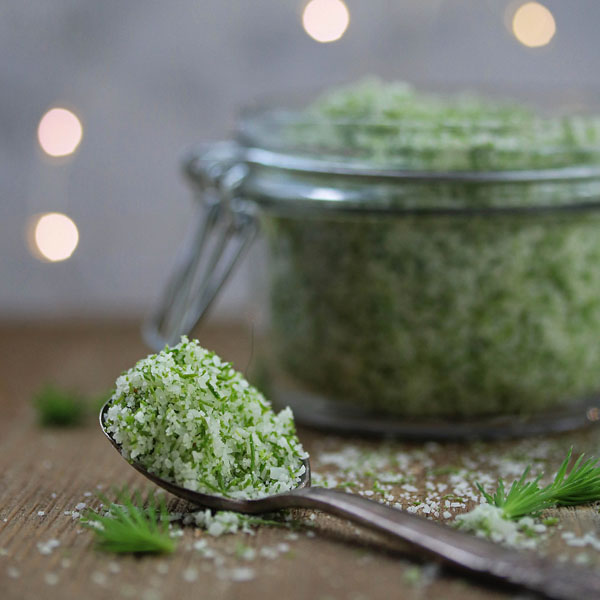
Spruce Tip Salt
Salt is a great way to preserve Spruce tips and has several uses itself. The key to making a well preserved Spruce Tip Salt is a ratio of 1:1. Use a coarse sea salt and be sure your Spruce tips are finely cut, ground if possible, and similar in size to the salt. This will help ensure a balanced ratio of tips to salt.
By using sea salt, your Spruce Tip Salt can be used both in food preparations and cosmetic applications. Spruce Tip Salt can be used as a base for different seasoning mixes and rubs. Alternatively, a cup of Spruce Tip Salt can be added to a bath and is great for the skin.
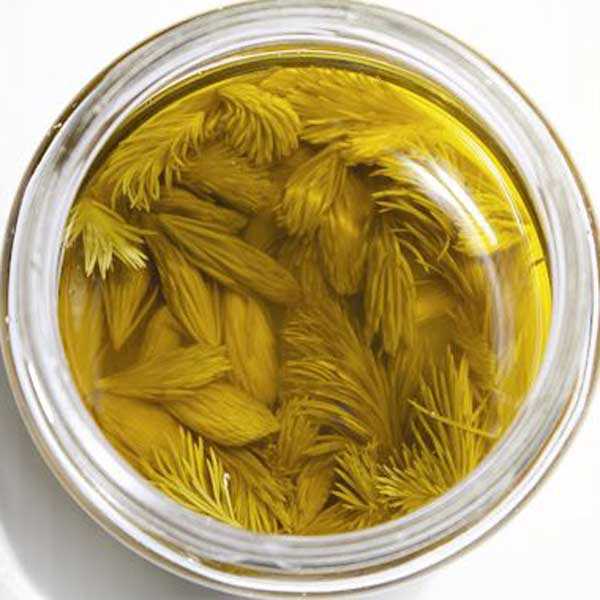
Spruce Tip Infused Olive Oil
Easy to make, but requires a fair few hours in the oven at a low temp. Spruce Tip Infused Olive Oil is another great way to preserve your tips for the year and can be used in a variety of preparations. By infusing the tips in Olive Oil the infusion can be used in food recipes as well as in cosmetic and medicinal preparations.
Our Printable PDF
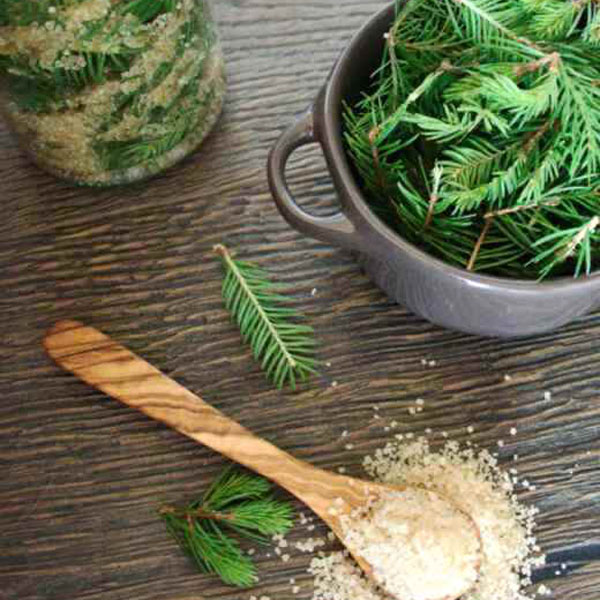
Spruce Tip Infused Syrup
“Let they food be thy medicine.” Spruce Tip Infused Syrup is another great way to preserve your tips and can be used in both food recipes and medicinal preparations alike. Whether you pour it over pancakes, ice cream… or just use it as a base to a homemade cough syrup, Spruce Tip Infused Syrup is both tasty and a healthy boost to your immune system.
Our Printable PDF
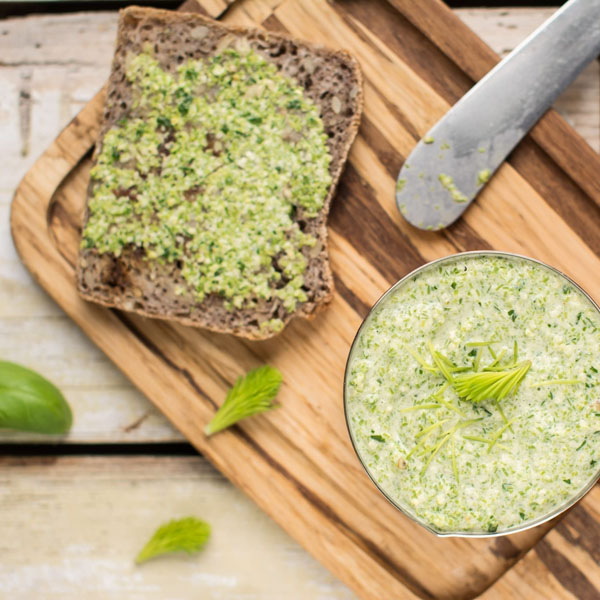
Vegan Spruce Tip Pesto
And just for fun, a tasty pesto that works well as a spread for sandwiches, a sauce for pasta, or even as a sauce for flatbread appies. It’s especially tasty paired with goat cheese and some fresh sprouts or leafy greens.